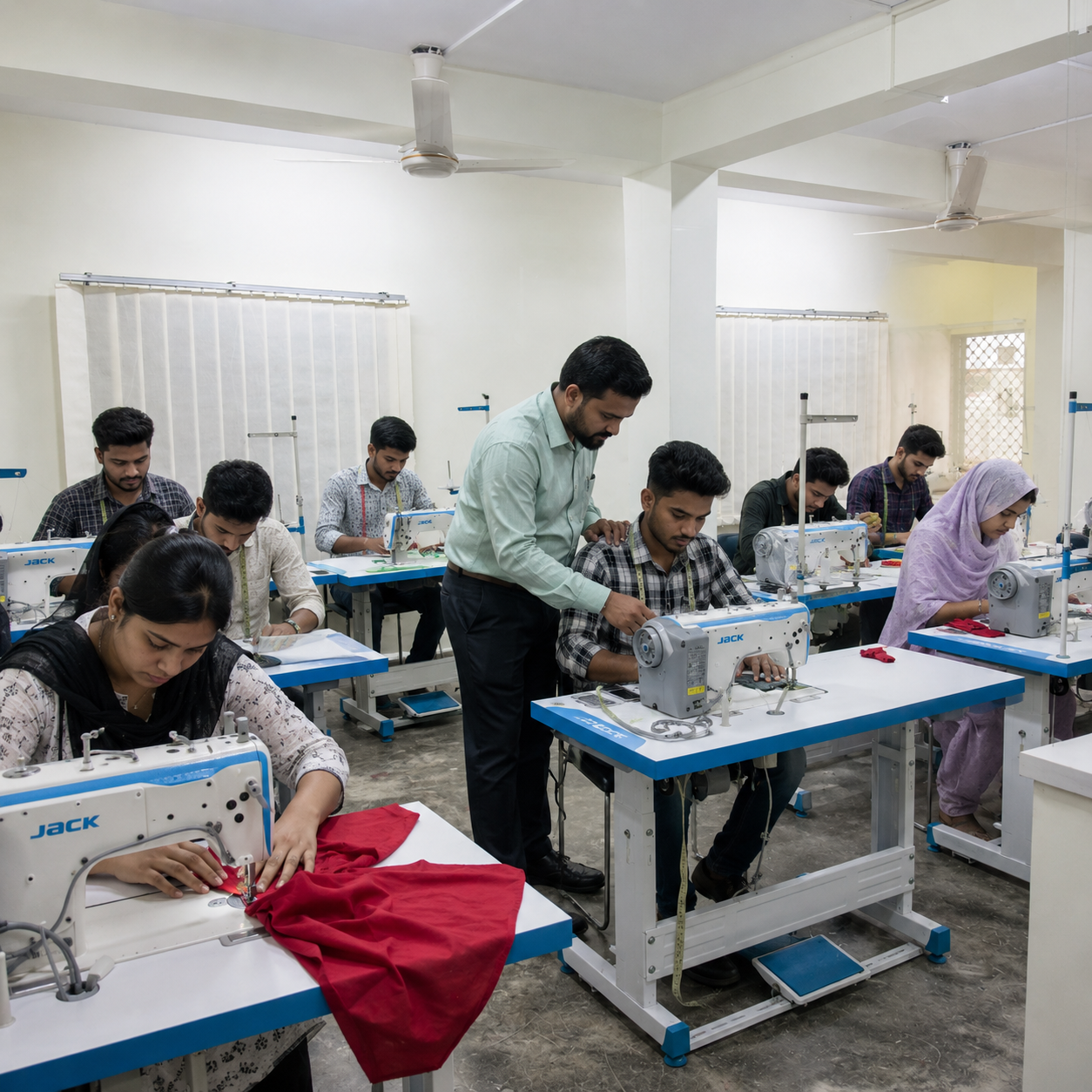
The fashion and apparel industry is one of the most dynamic and skill-driven sectors, offering a wide range of opportunities for people with practical knowledge of garment making, sewing, tailoring, and apparel production. With the growing demand for quality clothing and skilled professionals, developing practical fashion and garment-production skills can open doors to both employment and entrepreneurship.
Professional fashion training goes beyond theoretical knowledge. Students need hands-on experience to understand how garments are designed, cut, stitched, assembled, finished, and prepared for the market.
A practical training environment allows learners to work with sewing machines, fabrics, cutting tools, patterns, and other essential equipment. By practicing different garment-making techniques, students can gradually improve their accuracy, speed, and confidence.
Bangladesh has a strong Ready-Made Garments (RMG) and apparel manufacturing sector, creating opportunities for skilled workers and professionals across different stages of production. From sewing and garment construction to quality control and finishing, each stage requires specific technical skills.
Learners who understand industrial sewing, garment construction, fabric handling, production processes, and quality standards can develop skills that are valuable in both local and international apparel-production environments.
Sewing is one of the most important technical skills in garment production. Proper machine operation, stitch control, fabric handling, seam construction, and finishing techniques all contribute to the quality of a finished garment.
Through regular practice, learners can develop the ability to operate industrial sewing machines efficiently and produce consistent, professional-quality work. They can also learn how to identify common sewing defects and improve the overall quality of garment production.
A strong foundation in fashion and apparel production can lead to a variety of career opportunities. Learners may work as sewing operators, garment production assistants, quality-control staff, sample operators, finishing specialists, or other apparel-industry professionals.
With experience and additional skills, individuals can also progress toward supervisory and technical roles or establish their own tailoring, boutique, custom clothing, or small-scale garment production business.
Fashion skills are not limited to employment. Skilled individuals can use their knowledge to start their own businesses. From custom-made clothing and tailoring services to boutique fashion brands and small apparel-production units, there are many possibilities for entrepreneurs.
Understanding customer requirements, garment quality, production costs, fabric utilization, and professional finishing can help build a sustainable fashion business.
Developing practical skills in Fashion, RMG, and Apparel Production can provide a strong foundation for a successful career in the garment industry. With hands-on training, proper guidance, and consistent practice, learners can build the technical abilities required to produce quality garments and pursue opportunities in both employment and entrepreneurship.
Whether the goal is to become a professional garment worker, advance within the RMG industry, work in apparel production, or start a fashion business, practical training is an important first step toward building a successful career.
